
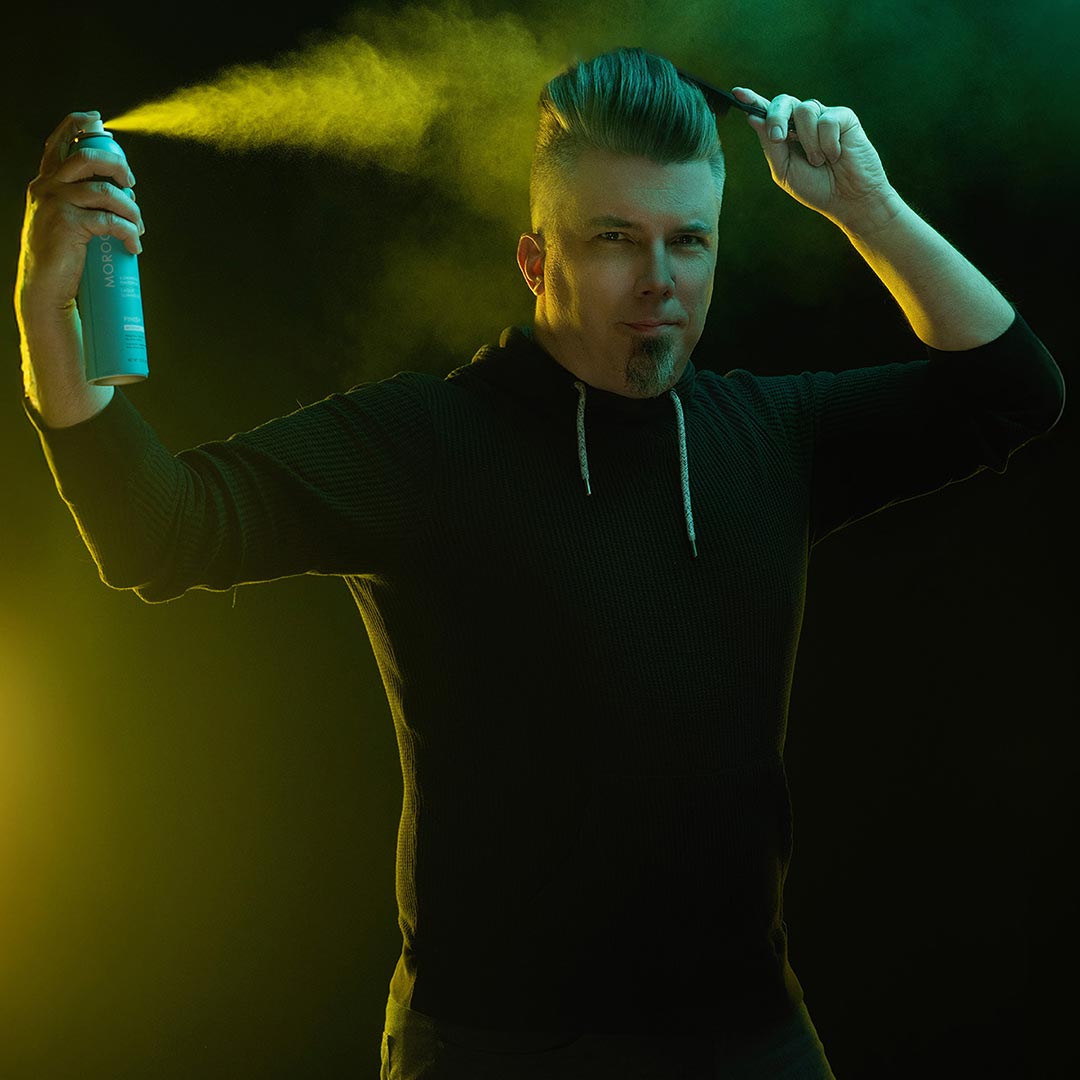
Douglas Weittenhiller
Specialty: Families, business and AI, weddings, branding, newborns
Doug Weittenhiller is the co-owner and lead photographer at Twig & Olive Photography, a Madison, Wisconsin studio he runs with his wife Courtney. Together they’ve earned multiple Wisconsin Bride “Best Photographer” honors and have photographed weddings and portraits across all 50 states and more than 20 countries. Doug holds a master’s degree in education and has been teaching at photography conferences for over a decade, which means he’s had plenty of time to figure out what actually sticks and what’s just noise. His classes are built around real problems with real solutions, delivered with the kind of dry humor that makes you forget you’re learning. When he’s not behind a camera or on a stage, he’s probably in the kitchen attempting something ambitious, losing a board game to one of his four kids, or rolling dice at the D&D table.
Follow Douglas Weittenhiller:
Douglas Weittenhiller’s Classes:
Class Description:
You know what nobody has ever said while looking at a beautiful wedding portrait? “Wow, I can really see the flash in that one.” The goal of artificial light in real-world photography has always been to not look artificial. And yet, most flash education teaches you how to overpower ambient light, slap a giant softbox on a stand, and create something that screams “I USED A STROBE” from across the room. If your flash-lit work looks nothing like your natural light work, your portfolio has a split personality, and your brand suffers for it.
In this advanced hands-on class, we’re going to teach you how to make a speedlight or strobe completely vanish into the ambient environment. Not “kind of blend in.” Not “close enough.” Disappear. We’ll break down the actual physics of why flash looks fake (spoiler: it’s almost never the power, it’s the color temperature and the modifier), and then we’ll fix it. You’ll learn how to read ambient light and match it precisely using CTO and CTB gels, how to select modifiers that replicate the quality of the existing light source, and how to dial in power ratios so that your strobe fills without overpowering. We’ll cover the inverse square law in a way that actually makes sense and show you exactly how distance affects the blend.
Using our Rent-A-Humans, you’ll work in breakout groups to light and photograph models where the goal is simple: if I can tell you used flash, you failed. By the end of this class, you’ll be able to supplement natural light in dark venues, overcast days, and harsh conditions without ever compromising the brand you’ve built.
What you will learn in this class:
• How to read and meter ambient light to establish your baseline exposure
• Precise gel selection (CTO/CTB) to match the kelvin temperature of your environment
• Modifier theory: which tools replicate window light, directional sun, and open shade
• Power ratio techniques for seamless ambient blending
• The inverse square law explained simply and applied practically
• Hands-on practice with breakout groups and live critique
What to Bring to Class:
Class note: This is an advanced class. You should be comfortable shooting in manual mode and have a basic understanding of off-camera flash before attending. Please bring your camera, one speedlight or strobe, a light stand, and any modifiers you own.
Class Description:
Here’s a fun scenario: your bride’s timeline just got cut from 45 minutes to 12. The sun dropped behind a building you didn’t scout. The venue coordinator just moved your portrait session from the garden into a hallway lit by three different color temperatures of fluorescent tubes. What do you do?
If your answer is “panic,” congratulations, you’re normal. But panic doesn’t ship galleries. This class does.
Most lighting classes teach you perfect setups in perfect conditions with perfect timelines. That’s adorable, but it’s not your Tuesday. The Chaos Protocol is a structured, repeatable decision-making framework for when the light turns on you mid-session. We’ll teach you exactly what to prioritize when everything degrades simultaneously: what settings to grab first, what to sacrifice, and how to deploy a rapid-response lighting setup in under five minutes that still looks like your brand. This isn’t about being a hero. It’s about having a system.
We’ll work through multiple real-world lighting disasters with our Rent-A-Humans, including rapidly fading golden hour, harsh midday with no shade, mixed indoor color casts, and transitions between indoor and outdoor spaces. You’ll practice the triage hierarchy in breakout groups under simulated time pressure, because the whole point is building muscle memory for when it matters.
What you will learn in this class:
• The triage hierarchy: what technical elements to prioritize when time and light collapse simultaneously
• How to read degrading light and make rapid exposure and positioning decisions
• Quick-deploy supplemental lighting setups that maintain brand consistency
• Techniques for seamlessly transitioning between indoor and outdoor light
• Managing mixed color temperatures in real-world venue environments
• Hands-on practice under simulated time constraints with live critique
What to Bring to Class:
This class will be conducted outdoors and/or in challenging indoor environments depending on weather conditions. Please bring your camera, one speedlight, and dress for the weather. Be prepared to move quickly.
Class Description:
Quick: why does f/2.8 work perfectly for a group of four at ten feet but turn into a depth-of-field nightmare at four feet? If your answer is “I don’t know, I just know it works at ten,” this class is for you.
Every single day, you use settings and techniques built on physics equations you’ve never seen. And that’s fine, most of the time. You can absolutely make great pictures without understanding the math. But when something goes wrong and you can’t figure out why, or when you want to push your gear beyond the recipes you’ve memorized, that’s where the science saves you. The trouble is, most technical photography education is either dumbed down to the point of uselessness or delivered by someone who thinks a 90-minute PowerPoint on optics is a good time. (It’s not. Trust me.)
So we’re doing this as a lab. Bring your camera. After I break down each concept, you’re going to immediately test it with your own gear and prove it to yourself. We’ll cover the depth-of-field equation and why distance matters more than aperture, the hyperfocal distance formula and how to actually use it in the field, the inverse square law and what it means for your lighting placement, lens compression (it’s not what you think it is), and how autofocus systems actually acquire your subject. Each concept gets explained in plain language, backed by the real math, and then you practice it right there. Think of it as Bill Nye teaches photography, except instead of the lovable Bill Nye from your childhood, it’s the hardened, climate-change-is-real, f-bomb-dropping Bill Nye.
What you will learn in this class:
• The depth-of-field equation: why distance-to-subject matters more than your aperture setting
• Hyperfocal distance made practical and usable in the field
• The inverse square law and its direct impact on light placement and falloff
• Lens compression demystified: it’s about distance, not focal length
• How modern autofocus systems work and how to optimize your settings for them
• Hands-on testing of every concept with your own camera gear
What to Bring to Class:
Please bring your camera and at least one lens for the best learning experience. A prime lens and a zoom lens would be ideal so you can test compression concepts with both.